Pages

Tuesday, 9 January 2018

Summer Learning - 09-01-18

Summer Learning Journey 2018

Day Seven: The Roaring 20's (The 1920's)
09-01-18

Activity 1: Popular Culture - The Silent Movie
In the 20's, going to the movies became a much more popular activity. The Civic Theater in Auckland and the Empire De Luxe in Dunedin were two huge theaters built. The most popular types of movies in New Zealand at the time were silent movies.
Image result for charlie chaplin the lions cage
One iconic silent movie is 'The Lion's Cage'.
Trailer - https://www.youtube.com/watch?v=mpjEyBKSfJQ
By watching this scene,  I think this movie is about a man in a circus. In this scene, he is trapped in a cage with a lion, and he tries to get the attention of a woman walking past, and when she sees him and the lion she faints. In the end she wakes up and lets him out of the cage.
Because there are no spoken words, actors rely on facial expressions and body language to tell the story. This makes silent films more exciting in that aspect. I think I would enjoy watching a few silent movies as they are a part of history and are pretty cool, but I would prefer going back to normal movies, as I have grown up watching them and they tell the story a bit better.


Activity 2: Art Deco
In the 20's in New Zealand and around the world, 'Art Deco' emerged.

Here is an example: 'Self Portrait', by Tamara de Lempicka.

I give this painting a rating of 3.5 out of 5 (an okay to good painting).
I have given it this rating as I think it is a nice painting, a mix between modern and vintage. It isn't exactly to my taste, but it is a good painting none the less.


Bonus Activity: Crossing the Tasman
In 1928, four men flew from Australia to New Zealand across the Tasman. This was the first time the trip had ever been made. One of the men was a New Zealander named T.H. McWilliams, who operated the radio. The radio stopped working after take off, then rain and ice completely covered the front windscreen, making it impossible for the pilot to see. Fortunately, they landed safely in Christchurch after flying for four hours.

Acrostic poem about finally getting home and seeing my family:
Home is a haven in the shape of a house,
Only my will to get home made my bravery a lion not a mouse,
My heart soared when I saw that big blue door,
Experiencing your love, I know I could never be poor.

Monday, 8 January 2018

Summer Learning - 08-01-18

Summer Learning Journey 2018
Image result for st joseph's cathedral dunedin
Week Two: A Period of Change (1870 - 1950)

Day Six: The Early Years (Late 1800's to 1919)
08-01-18

Activity 1: St Joseph's Cathedral
At the start of the 1900's, the British were initiating a ton of construction. They were building homes and community meeting places. One of the largest buildings made during this time was St Joseph's Cathedral in Dunedin.

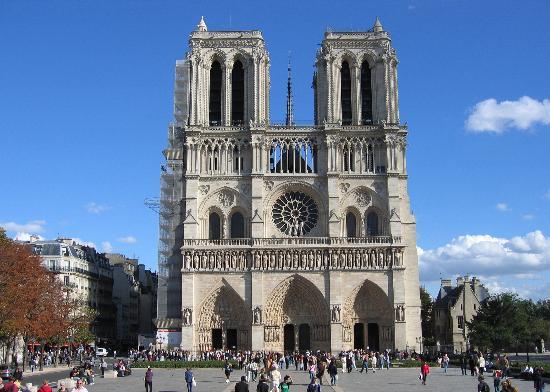
The Notre Dame is another famous cathedral.
Image result for Notre Dame

The full name of this cathedral is Notre-Dame de Paris.
It is located  on the Île de la Cité in Paris, France.
The build started in 1163 and took over 200 years, and was finally opened in 1345.
The cathedral is 69m tall.


Activity 2: The Right to Vote
The first leader of New Zealand's government was Richard John Seddon, who led from 1893 to 1906 and was the leader of the Liberal Party. Women were not allowed to vote until a woman named Kate Sheppard led a suffragist movement. The Electoral Act passed on the 19th of September 1893, giving women the vote. New Zealand was the first country in the world to give women the vote, and many countries still didn't allow women to vote until very recently, including Saudi Arabia.

I believe that the fact that Saudi Arabian women weren't allowed to vote until 2015 is very unfair. Women are just as equal as men, and should be treated that way. Unfortunately, in Saudi Arabia women's rights are very poor. Women aren't allowed to drive, dress the way they want, or travel, and they cannot do simple things like open a bank account  without a mans permission, and they are forbidden to leave home without a mans company. These rules need to change quickly so women can live the life they are supposed to live.


Bonus Activity: In Flanders Fields
A the beginning of the 19th century, New Zealand was at peace. Well, until World War I broke out in Europe and claimed the lives of 18,000 New Zealanders. Each year, on the 25th of April, we use ANZAC Day to remember the brave men and women who fought for our freedom.

The poem 'In Flanders Fields' by John McCrae is widely known.

In Flanders fields the poppies blow
Between the crosses, row on row,
Image result for poppies in flanders fields    That mark our place; and in the sky
    The larks, still bravely singing, fly
Scarce heard amid the guns below.

We are the Dead. Short days ago
We lived, felt dawn, saw sunset glow,
    Loved and were loved, and now we lie,
        In Flanders fields.

Take up our quarrel with the foe:
To you from failing hands we throw
    The torch; be yours to hold it high.
    If ye break faith with us who die
We shall not sleep, though poppies grow
        In Flanders fields.

I really like this poem, and I believe it is a lovely way to honor the brave soldiers who fought for mine and New Zealand's freedom. It makes me feel that I can feel carefree and know that I am safe here in New Zealand. It makes me feel sad for the families of the lost, but also in a way proud as their loved ones saved us from war and destruction.

Friday, 5 January 2018

Summer Learning - 05-01-18

Summer Learning Journey 2018

Day Five: The Dawn of a New Era...
05-01-18

Activity 1: Translating Phrases
From the 1840's onwards, Europeans started moving into New Zealand. Unlike Maori, the Europeans couldn't speak Te Reo which made it very difficult for the two people to communicate.
Image result for maori language
Phrases
1. Welcome to New Zealand - Nau mai ki Aotearoa.
2. Crystal is my name - Ko Crystal toku ingoa.
3. What is your name - He aha to ingoa.
4. I like to play rugby - He pai taku ki te takaro i te whutupaoro.
5. Where do you come from - No hea koe.

Activity 2: The Treaty of Waitangi
The Maori chiefs and British settlers of New Zealand came together to sign the Treaty of Waitangi on the 6th of February 1840, which outlined how the two people would work and live together in New Zealand.

Fun things to do in Waitangi

    Image result for waitangi treaty grounds
  • Take a look around the Treaty Grounds and gardens which are open for visiting. Dive into the historical occurrences and the traditional Maori culture of the Treaty House and be wowed by the largest Maori war canoes in the country. A replica of the original treaty is available for viewing inside the house.
  • Take a tour around the beautiful 28km Waitangi River and go fishing for trout with the family.
  • Take a hike around the 6km forest walk, which leads up to the gorgeous Haruru Falls. Gaze at the uniquely horseshoe shaped waterfall.
The activity I would most like to do is looking around the Treaty House and Grounds, as they are full of all the history and culture we have been learning about at school for years.

Image result for bill kiniBonus Activity: #EarnTheFern
After the Treaty was signed, New Zealand became a Commonwealth country along with Canada, South Africa, Australia, India, and Malaysia. A man named Melville Marks Robinson organised a sporting competition called the Commonwealth Games, which have been running since 1930, every 4 years.

New Zealand compete at a high standard in all the games, and in the most recent Glasgow games won a total of 45 medals. One of New Zealand's finest was a man named Bill Kini, who won a gold medal for heavyweight boxing in 1966. He also played rugby in the 60's for Otahuhu.

Four questions I would ask in an interview with Bill
  • Did it get tough training for both boxing and rugby?
  • Did either of your coaches get annoyed with the time you were spending on the other sport?
  • At the Commonwealth Games was the competition fierce or friendly?
  • Did you enjoy rugby or boxing more?

Thursday, 4 January 2018

Summer Learning - 04-01-18

Summer Learning Journey 2018

Day Four: Hitting a High Note...
04-01-18

Activity 1: The Waiata - A Song in Your Heart
Maori sing songs as a way of sharing their emotions and information.

I listened to a number of different waiata including - He Honore, Poi E, and Ka Pioioi, but my favourite had to be Pokarakare Ana. The song is about a man sharing his love for a girl. It arose in the north of Auckland at the start of World World One. I think the lyrics are really nice, and I like the tune.

Pōkarekare ana
ngā wai o Waiapu,
Whiti atu koe hine
marino ana e.
E hine e
hoki mai ra.
Ka mate ahau
I te aroha e.

Tuhituhi taku reta
tuku atu taku rīngi,
Kia kite tō iwi
raru raru ana e.

Whati whati taku pene
ka pau aku pepa,
Ko taku aroha
mau tonu ana e.

E kore te aroha
e maroke i te rā,
Mākūkū tonu i
aku roimata e.

This translates to:

They are agitated
the waters of Waiapu,
But when you cross over girl
they will be calm.
Oh girl
return to me,
I could die
of love for you.

I have written my letter
I have sent my ring,
so that your people can see
that I am troubled.

My pen is shattered,
I have no more paper
But my love
is still steadfast.

My love will never
be dried by the sun,
It will be forever moistened
by my tears.

http://folksong.org.nz/pokarekare/index.html


Activity 2: Playing Games
A long time ago, Maori children were taught many games including: Poi Rakau, Ki O Rahi, Koruru Taonga, and Poi Toa. I have played Poi Rakau and Koruru Taonga before.

Poi Rakau
Image result for poi rakauTraditionally the game was used as a training exercise for warriors to improve hand eye co-ordination.
One person stands in the middle, and the others form a circle around him. A rakau sticks are passes around the circle, and the aim of the game is to not drop the rakau or hit any other players with it.
If the person in the middle passes the rakau with his right hand, the catcher must catch it with their left hand and pass it left and vice versa.
To amp the game up, actions can be added like noises and movements that must be done before catching the rakau.


Bonus Activity: Musical Festivals - Matatini
Every two years, a festival called Te Matatini is held in New Zealand. The festival celebrates Maori culture, and Kapa Haka groups from all over New Zealand are invited to give a 25 minute performance.

Out of three performances from previous festivals, I have chosen the one I like the most.

#1 - Te Puku o Te Ika - https://www.youtube.com/watch?v=p4Zjgj9x4Yc
This performance was my favourite because it showed unity in the group. They were paying tribute to someone who had passed away and they were very passionate about their song and their performance.

Image result for te matatini#2 - Tamatea Arikinui
The poi were a wonderful touch and they were all exactly in time. The group was very talented, and the song was nice.

#3 - Te Iti Kahurangi
Although the group were extremely talented, especially the main singer, this performance was the least exciting. The group were very strong and unified though.

Wednesday, 3 January 2018

Summer Learning - 03-01-18

Summer Learning Journey 2018

Day Three: It's All in the Family
03-01-18

Activity 1: The More, the Merrier?
In the 1800's most families had seven to nine children, they were very big families!

victorian family.jpgIf I was back in the 1800's with nine siblings I don't think I would enjoy it. By my parents having so many children to look out for, I would probably be overlooked and wouldn't get much attention. With so many children to find room for, especially if we didn't have the best living conditions, I would probably have to share a room with a few of my siblings and I wouldn't enjoy that at all. With so many children to feed food would probably be scarce, especially if we were living in poverty like a lot of families were back then. Overall, I think it would've been tough for the children of the 1800's, and I wouldn't like to live like them.


Activity 2: Acknowledging Ancestry
A pepeha is a traditional way of identifying yourself. They provide information on who you are and where you and your family come from.

Image result for maori designsHere is my pepeha:

Ko Kā Tiritiri o te Moana ngā pae maunga
Ko Waimakariri te awa
Ko Te Huruhuru Ao o Horomaka te kura
Ko Ngati Pakeha iwi
No Otautahi ahau
Ko Stephanie rāua ko Carl ōku mātua
Ko Crystal Edminstin tōku ingoa.


Bonus Activity: Fun Family Facts
Everyone's family are unique and special to them.

These are three family members who are important to me.

Dad (Carl)
Two things he likes to do in the summer are playing backyard with his kids and having barbeques.
Two fun facts about him are that he performed in the Coca Cola choir at Christmas in the Park in 2013, and he grew up on a farm.

Mum (Steph)
Two things she likes to do in the summer are gardening and going on family walks.
Two fun facts about her are that she is really good at word puzzles and at Sea World she has been in the water with dolphins, which are her favourite animal.

Robbie (Brother)
Two things he likes to do in the summer are playing soccer and playing backyard cricket with his family.
Two fun facts about him are that his goal is to play soccer in England in the premier league one day, and that he has also lived in Blenheim and Nelson.

Tuesday, 2 January 2018

Summer Learning - 02-01-18

Summer Learning Journey 2018

Day Two: It's All In A Days Work
02-01-18

Activity 1: A House or a Home?
In the 1800's, Maori lived in pa (villages). There were usually three buildings in the pa. The kauta - where people cooked, the pataka - where everything was stored, and the wharepuni - where everyone slept.

Comparing a wharepuni to my home


Similarities
Differences
The shape of both the wharepuni and my house are fairly similar. The triangular roof shape is the same, as are the four walls whose positions are the same in both the wharepuni and my home.
The roof of a wharepuni is usually thatched (made of straw or a similar material), while the roof of my house is made of pressed metal. I would probably rather live under pressed metal than straw as I would be more protected from the elements.
Whanau are brought together in both a wharepuni and my home over birthdays, Christmases, and celebrations.
The walls of a wharepuni were made of materials like timber, fern, rushes (a plant), and bark, while my house is made of plasterboard and bricks. Although having walls made of plants and bark would be unique, I would rather be inside my own home.

Image result for wharepuni Image result for wharepuni


Activity 2: The Rules of Engagement
A long time ago, New Zealand men and women married at a young age. The women would have children and be expected to stay at home with them while the men went off to work.


Bonus Activity: Special Meals
In the 1800's, Maori ate a lot of fish and kumara.

Image result for steamed pork buns

My favourite food are steamed bbq pork buns. I first tried them at a market, and now I love them!
The bun is always soft and sweet, and the filling is delicious and sometimes spicy.

You can find the recipe here: http://thewoksoflife.com/2015/05/steamed-bbq-pork-buns-char-siu-bao/

Monday, 1 January 2018

Summer Learning Journey - 01-01-18

Summer Learning Journey 2018

Week One: In The Beginning (1800 - 1870)


Day One: Arriving in New Zealand
01-01-18

Activity 1: The First Settlers
Many believe that the first people to come to New Zealand were Polynesians, around 700 years ago.

Maui was a very important figure in Maori mythology. His story 'Maui and the Giant Fish' is well known.

  • Although Maui was younger than his brothers, he wanted to keep up with them and be as good as them at activities like fishing. He continuously tried to prove himself to them, and never gave up even when they made it difficult for him. He was resilient and determined.
  • He was very persistent and headstrong. Even when his brothers left without him to go fishing and made it very clear they didn't want him there, he still wove a fishing line and hid under the hull of the canoe.
  • He was a very good fisherman. When he was on the canoe reciting his karakia, his brothers caught more fish than they even had before. When he left his line down with only a small bit of his own blood on the hook, he managed to catch a huge fish immediately.
Image result for maui and the sun

Another one of Maui's legends I have heard is of how he slowed the sun. He believed that there wasn't enough time in the day to complete chores and gather food. He didn't want the length of his days to be dictated by the sun anymore. So, he gathered all his whanau and created a mission, to capture the sun and make their days longer. At first, everyone was too afraid to help, but after hearing a recount of all the things Maui had achieved, they decided to assist. First they weaved flax into ropes and gathered supplies, then they were off on their quest. They traveled for 12 days, and on the twelfth night they came across the Sun asleep in his pit. Overnight, they built huts to hide their ropes, and built a wall to shelter themselves. When the Sun awoke at dawn, they all pulled tightly on the ropes and captured the Sun. Using the power of his magic jawbone, Maui ordered the Sun to travel much slower over the sky. Because of this, Maui and his whanau's days were much longer.

Activity 2: Setting Sail
The first settlers of New Zealand had to sail on a waka across the ocean miles away from their homes.

Image result for waka
Letter to friend while on board a waka travelling to a new country:
Dear friend,
How is our home? Even though it has only been a few weeks, it feels as if it's been years. The waka is very small and as there are a lot of people aboard, it is very cramped. My arms are sore from all the rowing I have been doing, but as the youngest on board I am allowed a few breaks a day. Although travelling to England is a huge opportunity, I am very nervous. What will the people be like? How about the culture? The weather? The schooling? It's going to be very strange not seeing you and my family everyday, but we can keep in contact over letters once a week. You can tell me about home and school, and I can tell you about the terrifying new things I will be doing here.
Thinking of you always,
Crystal.

Bonus Activity: Waka Ama
Image result for waka amaThere is a sporting competition where both boys and girls race in waka, called 'Waka Ama'.

One day I would love to race in the Waka Ama, as it looks very lively and entertaining. It brings whanau together and sets a goal to work towards. The training for competitive would be a bit too challenging for me, but I would enjoy participating for fun with my friends and family.